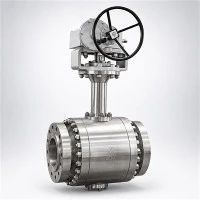


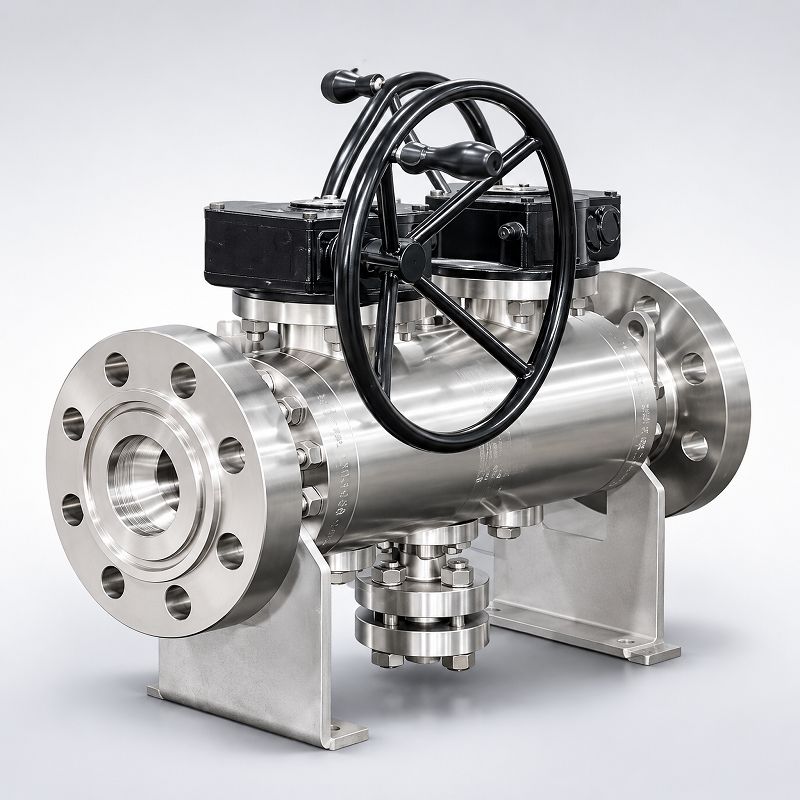
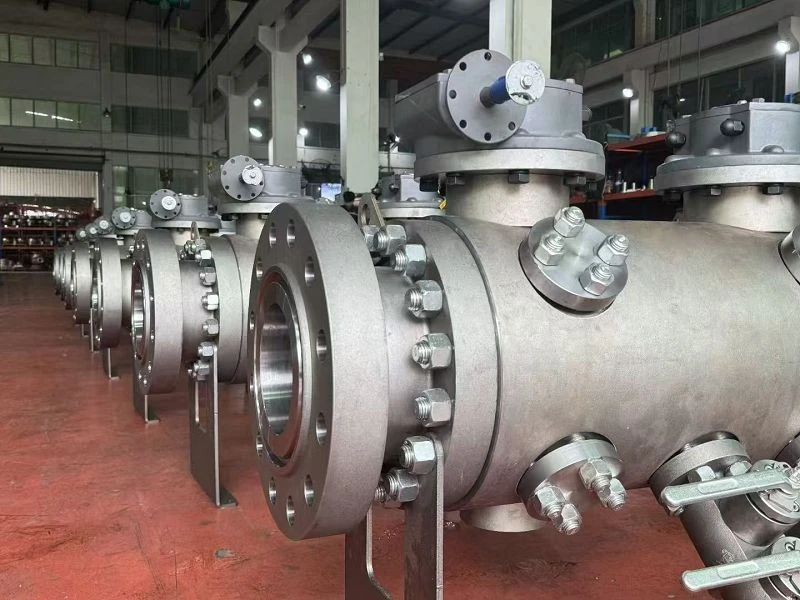
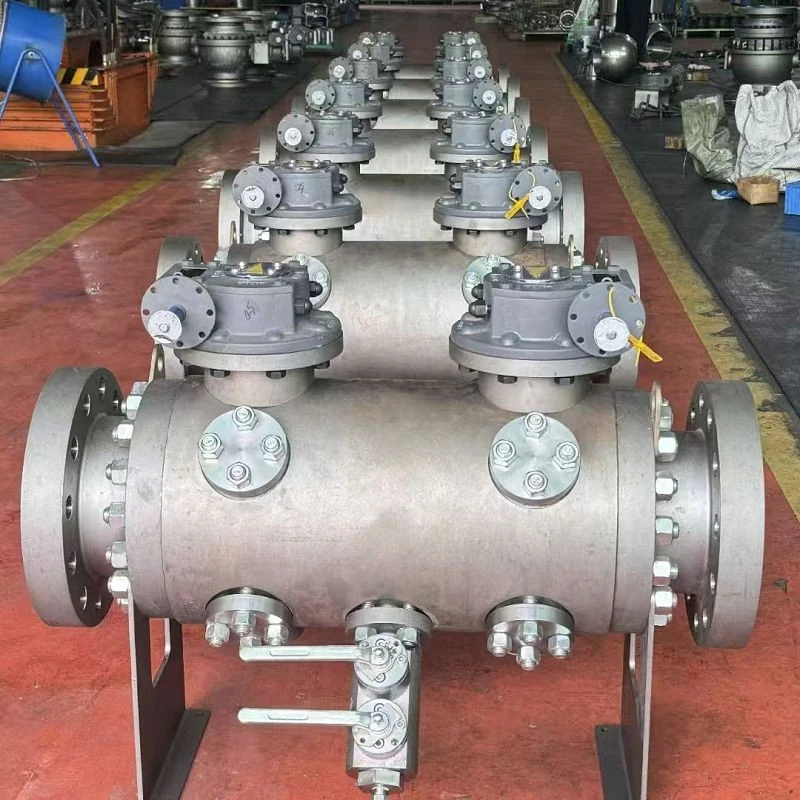
Shandong Yuhong Valve Co., Ltd. is one of the most reliable manufacturers and suppliers of dbb ball valve in China. We have world-leading production equipment and strong manufacturing capabilities. Welcome to wholesale bulk high-grade dbb ball valve from our factory.
Product Introduction
Yuhong DBB ball valves integrate double block and bleed functions in a single assembly, with twin-ball independent isolation, forged bodies and high-performance seating options. Serving oil and gas, chemical plants and industrial instrumentation systems, they provide dependable medium isolation and seal verification for critical piping.
Product Overview
A DBB ball valve (Double Block and Bleed Ball Valve) is an industrial isolation valve that combines double block and intermediate bleed functions in one unit. It is mainly used in systems that place high demands on piping isolation reliability, seal verification and operating safety.
The core function of DBB is a bleed passage between two block seals. When the valve is closed, the two seals isolate the respective pressure sources, and the operator can release trapped pressure through the intermediate bleed port and check sealing performance under specified test conditions.
In oil and gas transmission, petrochemical and high-pressure industrial systems, piping may carry high pressure, and the medium may be flammable, volatile or otherwise hazardous. For lines that require equipment isolation, instrument maintenance or medium switching, dependable block and bleed capability is especially important.
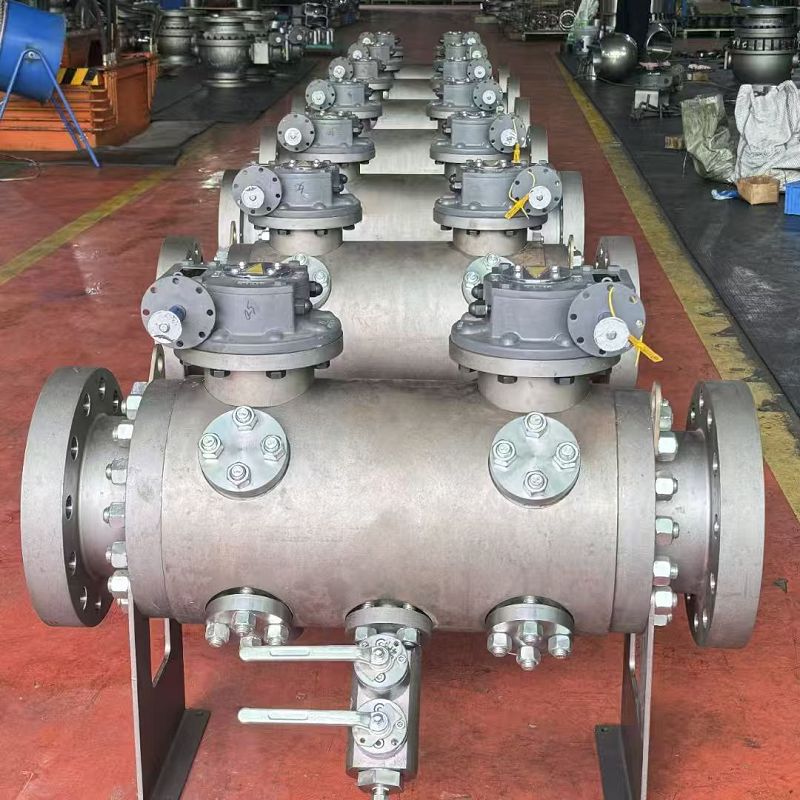
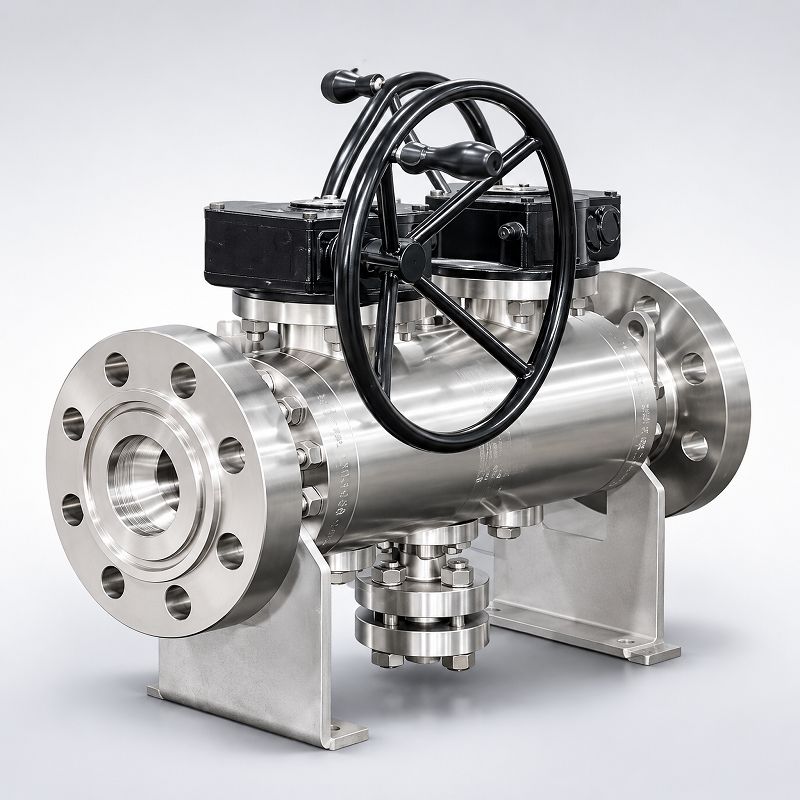
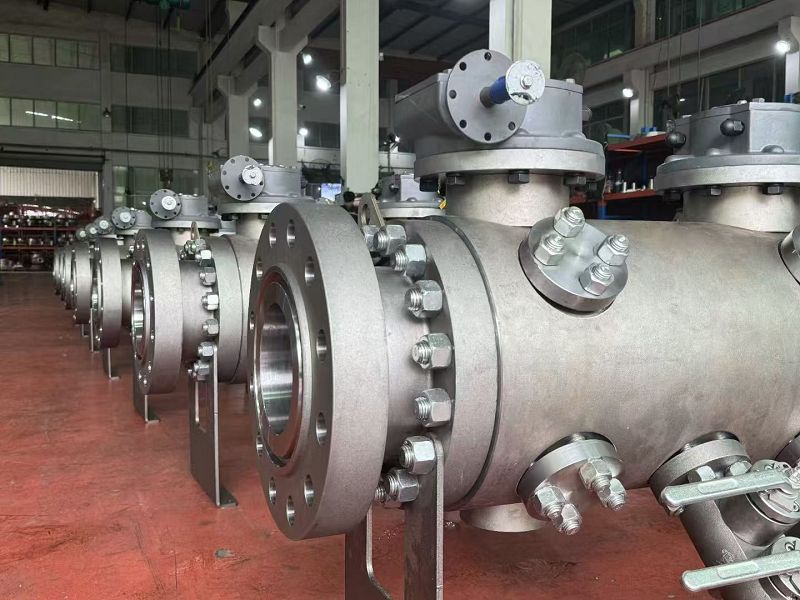
Yuhong DBB ball valves can use a twin-ball independent isolation structure, with two independent balls and stem operating mechanisms in one body and a bleed passage between the two balls. Depending on the application, a single-ball double-seat structure that meets the DBB functional definition can also be configured.
The typical flow path of the twin-ball structure is:
Medium inlet → first block ball → intermediate bleed cavity → second block ball → medium outlet
After both balls are closed, the residual medium and pressure in the cavity can be discharged through the intermediate bleed port.
Depending on service conditions, the bleed element can be a needle bleed valve, a ball bleed valve or another suitable dedicated bleed structure.
Shandong Yuhong Valve Co., Ltd. can provide compact, one-piece and modular DBB ball valve configurations based on the medium, temperature, pressure, connection standards and isolation requirements provided by the customer, with manual, pneumatic and electric control options.
Core Technical Advantages of the DBB Ball Valve
1. Double Block for Higher Isolation Reliability
The DBB structure provides two block seals, allowing the valve to isolate pressure sources from both ends of the line.
For the twin-ball structure, the two balls have independent operating mechanisms and can be closed separately according to the operating procedure, forming a bleedable intermediate space between the two isolation elements.
This structure makes it easier to verify the sealing condition of the valve and provides a more complete isolation configuration when combined with proper process isolation procedures.
It should be noted that the DBB function should not be taken to mean double independent single-side pressure isolation under all conditions. The isolation level for equipment maintenance should be confirmed against the specific seat design, pressure direction and site safety procedures.
2. Integrated Intermediate Bleed Function
The intermediate bleed passage is a key feature that distinguishes DBB ball valves from ordinary shut-off structures.
A dedicated bleed port allows the pressure between the two block seals to be released under specified operating conditions, and the residual medium to be directed into a suitable safe discharge or recovery system.
For hazardous media, the bleed port should be connected to discharge facilities that meet safety requirements, rather than venting directly to the work area.
Depending on service conditions, manual bleed, lockable bleed or remotely controlled bleed structures can be selected.
3. Compact Structure with Fewer External Connections
One-piece or modular DBB ball valves integrate the block and bleed functions into a single assembly.
Compared with an installation built from multiple separate valves and intermediate fittings, the compact structure reduces some connection interfaces and, where appropriate, lowers installation space and weight.
For space-constrained instrument connections, skid-mounted equipment and high-pressure piping, this structure has clear engineering value.
Face-to-face dimensions can follow standard lengths or specially designed compact dimensions, and should be confirmed against the project piping layout.
4. Suitable for High Pressure and Severe Services
DBB ball valves can be built with forged carbon steel, low-temperature steel, stainless steel, duplex steel and special corrosion-resistant alloy bodies.
Depending on pressure class, medium and operating temperature, reinforced PTFE, PEEK, Devlon and metal seated structures can be selected.
For high-pressure gas, low-temperature liquid or corrosive chemical media, the seat pressure-temperature performance, stem sealing and pressure-bearing capacity of the bleed assembly should be checked at the same time.
5. Optional Fire-Safe, Anti-Static and Low-Emission Design
For oil and gas and hazardous chemical projects, anti-static devices, blowout-proof stems, fire-safe seats and low-emission packing can be configured.
For projects that must meet specific fire-safe or low-emission ratings, design and verification can be carried out according to the applicable standards.
These configurations should cover both the main block components and the bleed elements related to the service, so that the bleed system sealing is not overlooked while only the main valve is checked.
6. Manual and Automated Operation
DBB ball valves can be equipped with levers, gear operators, pneumatic or electric actuators according to process requirements.
For the twin-ball structure, two independent operating mechanisms can be used, or an interlocked control scheme can be evaluated according to project requirements.
Automation packages can add open/close limit feedback, solenoid valves, position transmitters and remote control accessories to meet applicable process isolation and interlocking needs.
Technical Specifications
|
Item |
Parameters and Options |
|
Product Name |
DBB Ball Valve |
|
English Name |
DBB Ball Valve / Double Block and Bleed Ball Valve |
|
Product Function |
Double Block and Bleed |
|
Main Structure |
One-piece, compact, modular, multi-piece |
|
Isolation Structure |
Twin-ball independent block structure; single-ball double-seat structure meeting the DBB definition |
|
Nominal Size |
Instrument type DN15–DN80; pipeline type DN25–DN900 (NPS 1–36) |
|
Special Sizes |
Large-bore pipeline structures designed per project |
|
Nominal Pressure |
PN16, 25, 40, 63, 100, 160, 250, 320, 400, 420 |
|
ASME Pressure Class |
ASME Class 150, 300, 600, 900, 1500, 2500 |
|
Special High-Pressure Configurations |
Instrument and wellhead connections designed per applicable codes |
|
Operating Temperature |
Standard -29°C to +200°C; special low-temperature designs down to -196°C; metal seated high-temperature designs evaluated up to +425°C |
|
Body Manufacturing |
Integral forging, split forging, suitable cast structures |
|
Body Materials |
ASTM A105, A105N, A350 LF2, LF3, WCB, WCC, LCB, LCC |
|
Stainless Steel Materials |
ASTM A182 F304, F304L, F316, F316L; CF8, CF8M, CF3M |
|
Duplex Materials |
A182 F51, F53, F55 and suitable cast duplex grades |
|
Special Alloy Materials |
Monel, Inconel, Hastelloy, 904L, etc. |
|
Ball Structure |
Floating or trunnion mounted, per DBB assembly design |
|
Ball Materials |
A105+ENP, 304, 316, 316L, 17-4PH, duplex and suitable alloys |
|
Ball Surface Treatment |
Electroless nickel plating (ENP), STL overlay, tungsten carbide and other suitable hardening |
|
Stem Materials |
304, 316, 316L, 410, 17-4PH and suitable alloys |
|
Seat Structure |
Spring-loaded seats, pressure-assisted sealing, suitable bidirectional sealing structures |
|
Seat Materials |
PTFE, RPTFE, PEEK, Devlon, Nylon and metal seats |
|
Metal Seat Configuration |
Stainless steel or suitable alloy seats with STL or wear-resistant coating |
|
Bore Type |
Full Bore, Reduced Bore |
|
Sealing Function |
Double block; special structures can be designed for specified DIB requirements |
|
Bleed Structure |
Intermediate bleed valve, bleed port, discharge and test passage |
|
Bleed Valve Type |
Needle valve, ball valve and suitable dedicated structures |
|
Common Bleed Connections |
1/4", 3/8", 1/2", 3/4" NPT, etc. |
|
Bleed Port Position |
Top, side, bottom or oriented per piping installation |
|
Cavity Pressure Protection |
Self-relieving structure, independent pressure relief measures and suitable cavity protection schemes |
|
Shut-off Leakage Requirements |
API 6D, API 598, ISO 5208 and technical agreement requirements |
|
Blowout-Proof Stem |
Anti-blowout stem design optional |
|
Anti-Static Structure |
Anti-static device optional |
|
Fire-Safe Design |
Designed and verified per API 607, API 6FA, ISO 10497 as applicable |
|
Low-Emission Design |
Configured per ISO 15848-1, API 641 as applicable |
|
Stem Packing |
PTFE, reinforced PTFE, flexible graphite, low-emission packing |
|
End Connections |
RF, RTJ, BW, SW, NPT, Hub, etc. |
|
Flange Standards |
ASME B16.5, B16.47, EN 1092-1 |
|
Butt Weld End Standard |
ASME B16.25 |
|
Threaded Connection Standard |
ASME B1.20.1 |
|
Face-to-Face |
ASME B16.10, API 6D or dedicated compact dimensions |
|
Actuator Interface |
ISO 5211 and suitable dedicated brackets |
|
Operation |
Lever, gear, pneumatic, electric, hydraulic |
|
Automation Control |
Independent operation, interlocked control, open/close feedback, suitable interlock schemes |
|
Fail-Safe Configuration |
Determined separately for main block and bleed functions |
|
Ingress Protection |
IP65, IP66, IP67; IP68 optional for special actuators |
|
Explosion Protection |
Actuators and electrical accessories with applicable certification for hazardous areas |
|
Optional Accessories |
Locking devices, position feedback, solenoid valves, smart actuators, bleed piping |
|
Sour Service Materials |
Selected per ISO 15156 / NACE MR0175 |
|
Main Design Standards |
API 6D, ASME B16.34, API 608 and applicable product codes |
|
Test Standards |
API 6D, API 598, ISO 5208 and project-specific tests |
|
Special Functional Tests |
Double-end sealing, cavity bleed, relevant seat sealing and automated operation tests |
Note: The table covers standard and high-end custom options for different DBB structures. High-pressure, cryogenic, high-temperature, DIB and fire-safe configurations require corresponding materials, sealing and test programs, and the extreme parameters cannot be combined arbitrarily.
Typical Applications
1. Oil and Gas Transmission
In oil and gas pipelines and station systems, DBB ball valves can be used at critical points that require isolation from pressure sources at both ends plus intermediate bleed capability.
By closing the block structure and bleeding and checking the intermediate cavity, operators can determine whether the isolation function meets the specified requirements.
For high-pressure natural gas service, seat material resistance to rapid gas decompression, low-emission stem sealing and applicable fire-safe requirements should also be considered.
2. Petrochemical Plants
Some process lines, equipment connections and medium switching systems in chemical plants require the isolation status to be confirmed before equipment maintenance or process operations.
DBB ball valves provide an integrated block and bleed configuration, reduce some external connections and support seal verification according to the technical agreement.
For flammable, toxic and volatile media, a safe bleed destination should be arranged to prevent residual medium from being discharged directly into the work area.
3. Industrial Instrument Isolation Systems
At pressure transmitters, pressure gauges, analyzers and other process measurement connections, DBB ball valves can isolate the process medium and reduce residual pressure in the defined isolation space through the intermediate bleed passage.
The compact structure helps reduce connection parts and installation space at instrument interfaces.
For instrument systems, combined flange and threaded connections, integral forged bodies and needle bleed structures are available.
4. High-Pressure Process Equipment
Some high-pressure industrial equipment, skid-mounted units and process connections place high demands on sealing reliability and bleed operation.
The appropriate one-piece or modular DBB structure can be selected according to design pressure, temperature and maintenance method.
For maintenance conditions requiring double independent isolation, the corresponding isolation level and system safety requirements should be defined explicitly, rather than relying on the product name alone.
5. Chemical Sampling and Injection Systems
In some process sampling, chemical injection and special fluid monitoring systems, compact DBB assemblies can be used for line isolation and pressure release.
For hazardous media, medium compatibility, sealing materials, bleed port location and cleaning and maintenance requirements should be considered together.
How Does a DBB Ball Valve Achieve Double Isolation and Bleed?
Step 1: Close the Block Mechanisms
For the twin-ball independent isolation structure, the operator closes the two balls according to the specified procedure, so that the intermediate bleed cavity is isolated from the piping at both ends.
The operating sequence should be determined in conjunction with system pressure status, medium and equipment operating requirements.
Step 2: Open the Intermediate Bleed Port
After confirming that the bleed path is safe, the pressure and residual medium in the intermediate cavity are discharged through the dedicated bleed valve.
For flammable, toxic or other hazardous media, the bleed passage should be connected to appropriate safe treatment facilities.
Step 3: Check the Sealing Condition
Under the specified test conditions, observe whether the intermediate cavity shows continuous pressure recovery, medium outflow or other abnormal signs.
If significant continuous leakage is present, the block elements, seats and bleed structure should be inspected. Follow-up work must not proceed before the isolation status is confirmed.
Metallurgy:
A DBB ball valve is one part of the process isolation system. Before actual maintenance, site lockout/tagout, medium drainage, pressure verification and other safety procedures must also be completed.
The DBB function itself cannot replace complete personnel safety isolation measures.
Key Selection Factors for DBB Ball Valves
1. Define the Pressure Conditions at Both Ends
The maximum pressure the valve may see at each end should be provided, together with the pressure direction under different operating modes.
For the twin-ball structure, the maximum closing differential pressure allowed for each block element should be confirmed separately.
For the double-seat structure, the actual sealing capability of the seats under the relevant pressure direction should be confirmed.
2. Choose the Correct Isolation Structure
Different DBB structures offer different isolation performance.
If the project requires two independent balls, the twin-ball structure should be specified. If a double-seat scheme meeting the specific API 6D DBB definition is required, the corresponding seat sealing and bleed tests should be defined.
When the technical agreement further requires DIB functionality, the corresponding double isolation capability should be confirmed independently. DBB and DIB should not be treated as identical concepts.
3. Determine How the Bled Medium Will Be Handled
For clean, non-hazardous suitable media, the bleed and collection method can be designed according to site conditions.
For flammable, toxic, corrosive or high-pressure gas, the bleed port should be connected to an appropriate safe discharge or recovery system.
The bleed valve materials, port location and cleaning and maintenance arrangements should also match the medium and site conditions.
4. Consider Cavity Thermal Expansion Overpressure
When liquid is trapped inside the valve cavity, rising temperature can cause pressure to increase.
The design should therefore distinguish between the intermediate bleed cavity, the ball's own cavity and other locations where closed spaces may form, and provide appropriate pressure relief measures.
In particular, for projects using double-acting pressure sealing structures, structural damage caused by an unrelieved cavity should be avoided.
5. Calculate Operating Torque and Select Actuators
For high-pressure, large-bore or metal seated DBB structures, the operating torque of each block element should be calculated separately.
Automation projects should also determine whether the two main block elements are controlled independently or interlocked, as well as the control method and safe position of the bleed mechanism.
How Does Yuhong Ensure the Manufacturing Quality of DBB Ball Valves?
1. Pressure-Bearing Parts and Material Inspection
DBB ball valves can adopt integral forged or suitable split structures.
For high-pressure and critical projects, Yuhong can carry out chemical composition, mechanical property, hardness and material traceability checks on raw materials as required.
For stainless steel, duplex and special alloy projects, PMI and other material verification can be added according to the technical agreement.
2. Precision Machining of Balls and Seats
Ball roundness, surface quality, seat sealing faces and related fitting dimensions are important factors affecting shut-off leakage performance.
For the twin-ball structure, the machining quality of each ball and seat set is controlled separately, so that each can open, close and seal as designed.
For metal seated structures, hard alloy overlay, coating quality and seal face finishing should also be inspected.
3. Intermediate Bleed Structure Inspection
A DBB product must ensure that the intermediate bleed passage works as designed.
During assembly, the bleed port, connecting threads, sealing components and operating mechanism should be checked to prevent blockage of the bleed passage or leakage at the connections.
For high-pressure and hazardous media, dedicated pressure and sealing checks should be carried out according to design requirements.
4. Double Block Function Verification
In addition to normal shell pressure and seat sealing tests, DBB ball valves require double block and bleed functional tests according to their structure.
Per applicable API 6D requirements, test pressure can be applied to the specified valve end while monitoring leakage at the intermediate cavity bleed passage, verifying the actual condition of the block seals.
For products with automated actuators, the operation, position feedback of each block element and the operating performance of the bleed mechanism should also be checked separately.
FAQ
Q1: What is the difference between DBB and DIB?
DBB (Double Block and Bleed) refers to double block with an intermediate bleed function. The emphasis is that the space between the two block seals can be bled and the sealing condition checked.
DIB (Double Isolation and Bleed) places further requirements on double-side isolation capability and is divided into different structure types. The two have different definitions and test conditions. Selection should follow the project technical agreement, and the terms should not be used interchangeably.
Q2: How to choose between twin-ball DBB and single-ball double-seat DBB?
The twin-ball structure places two independent balls and operating mechanisms in one body. The two block elements can be operated separately, the isolation status is intuitive, and each can be verified individually.
The single-ball double-seat structure is more compact, but both seals share the same ball. When the project requires two independent block elements, the twin-ball structure should be specified.
Q3: Can the intermediate bleed port be vented directly to atmosphere?
For clean, non-hazardous suitable media, the bleed method can be determined according to site conditions and environmental requirements.
For flammable, toxic, corrosive or high-pressure media, the bleed port must be connected to a discharge or recovery system that meets safety requirements, and must not be vented directly into the work area.
Q4: With a DBB ball valve installed, are other safety measures still needed for maintenance?
Yes. DBB is one part of the process isolation system and cannot replace complete personnel safety isolation measures.
Before actual maintenance, lockout/tagout, medium drainage, pressure verification and other safety procedures required by the site should also be carried out.
Q5: Can the two balls of a twin-ball DBB be operated in an interlocked manner?
An interlocked control scheme can be evaluated according to project requirements, but the independent operating capability of the two balls is an important feature of the twin-ball structure.
When interlocked control is adopted, the specified isolation and bleed requirements should still be met under fault conditions.

Request a DBB Ball Valve Quotation
If your project requires reliable line isolation, intermediate bleed or seal verification, Shandong Yuhong Valve Co., Ltd. can provide one-piece, compact and modular DBB ball valve configurations based on service conditions.Please provide the medium, temperature, maximum pressure at both ends, nominal size, end connections, isolation structure requirements, bleed port specifications and actuator control method.Yuhong will evaluate the appropriate block structure, sealing materials, bleed assembly and automation package, and provide a technical and commercial quotation.
Shandong Yuhong Valve Co., Ltd. Email: info@yuhong-valve.com
Hot Tags: dbb ball valve, China dbb ball valve manufacturers, suppliers, factory, ASME Class 2500 globe valve, corrosive fluid globe valve, erosion resistant trim globe valve, PN63 globe valve, pressure seal forged globe valve, Three Way Control Valve