

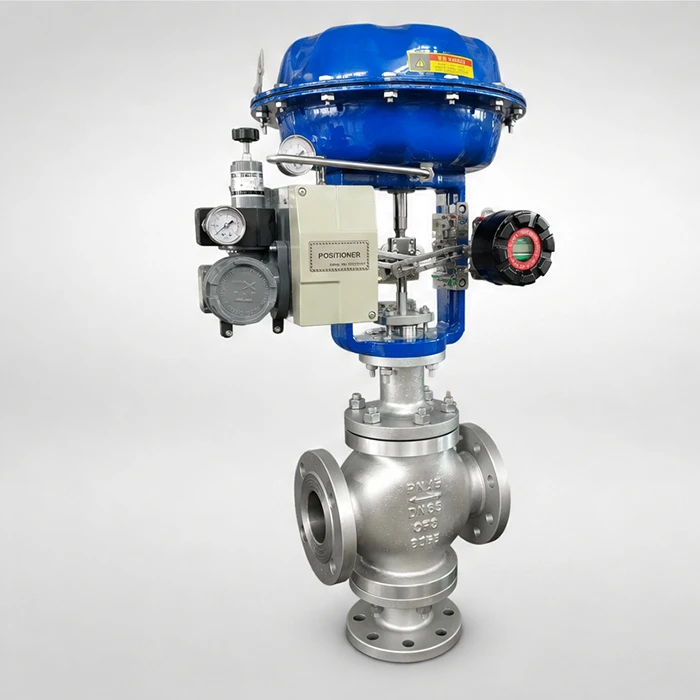
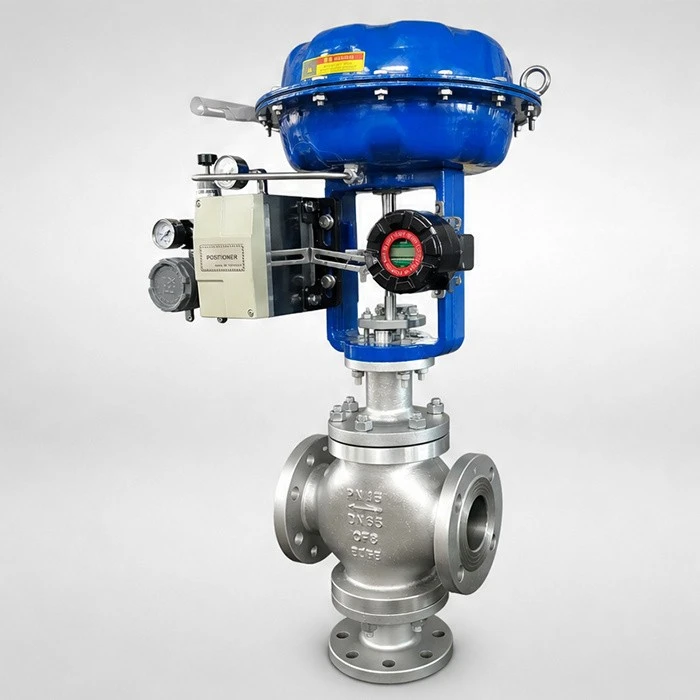
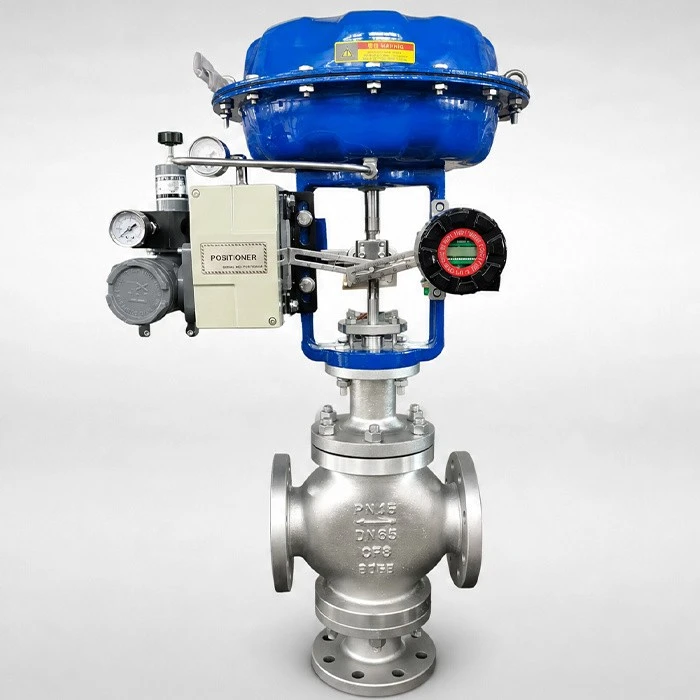
Shandong Yuhong Valve Co., Ltd. is one of the most reliable manufacturers and suppliers of three way control valve in China. We have world-leading production equipment and strong manufacturing capabilities. Welcome to wholesale bulk high-grade three way control valve from our factory.
A Three Way Control Valve has three ports. It can combine two flow streams into one outlet, or split one flow stream into two outlets. Based on the flow direction, it is usually divided into two types: mixing type and diverting type.
A three way mixing control valve is often used when two media need to be mixed before entering the next process. For example, hot water and return water can be mixed to control outlet temperature. A three way diverting control valve is used when one flow needs to be sent to two different lines. It is common in bypass systems, heat exchangers, cooling loops, and process switching points.
The main value of this valve is system control. It can replace two separate control valves in some pipeline layouts. This can make the piping simpler and reduce the number of control points. It also helps the plant keep stable temperature or flow balance with one actuator.
Yuhong designs the valve according to real process data. Our engineers check the medium, flow direction, temperature, inlet and outlet pressure, required flow range, and control purpose. For a three way valve, flow direction must be confirmed clearly before production. Port marking, plug structure, actuator action, and installation direction all affect the final control result.
Technical Parameters
|
Item |
Standard Options & Custom Range |
|
Product Name |
Three Way Control Valve |
|
Other Name |
3 Way Control Valve / Three Way Mixing Control Valve / Three Way Diverting Control Valve |
|
Valve Type |
Linear motion globe type three way control valve |
|
Function |
Mixing flow / diverting flow / bypass control |
|
Size Range |
DN25-DN300 / 1"-12" |
|
Pressure Rating |
PN16-PN100 / ANSI Class 150-Class 600 |
|
Body Material |
WCB, CF8, CF8M, WC6, WC9, special alloy |
|
Trim Material |
304, 316, 17-4PH, Stellite hard facing, project material |
|
Seat Type |
Metal seat / soft seat by service condition |
|
Flow Characteristic |
Linear / equal percentage / custom characteristic |
|
Connection Type |
Flanged, butt weld, customized connection |
|
Bonnet Type |
Standard bonnet, extended bonnet, bellows sealed bonnet |
|
Actuator Type |
Pneumatic diaphragm, pneumatic piston, electric actuator |
|
Accessories |
Positioner, air filter regulator, solenoid valve, limit switch, handwheel |
|
Leakage Class |
ANSI/FCI 70-2 Class IV, Class V, or project requirement |
|
Applicable Media |
Water, steam, thermal oil, gas, chemical liquid, clean process fluid |
|
Main Standards |
ISO 9001, IEC 60534, ASME B16.34, ASME B16.5, ANSI/FCI 70-2 |
Product Features
Mixing and Diverting Functions
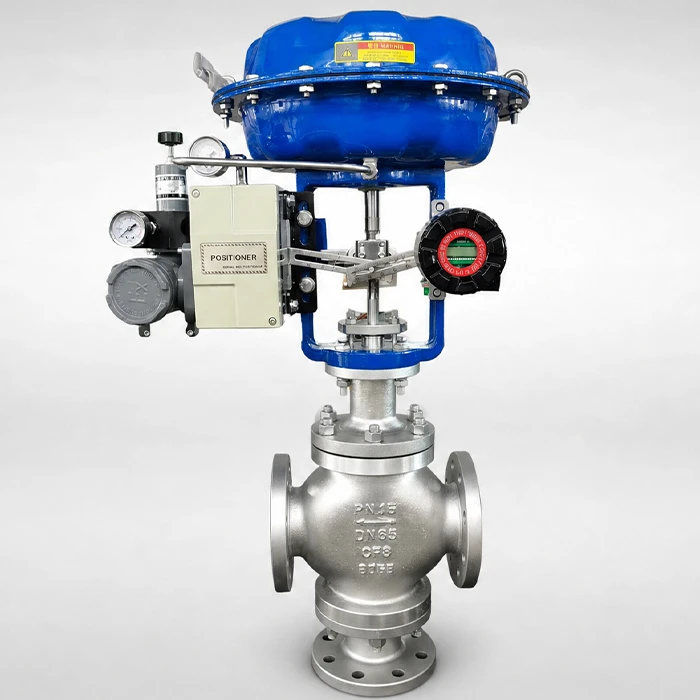
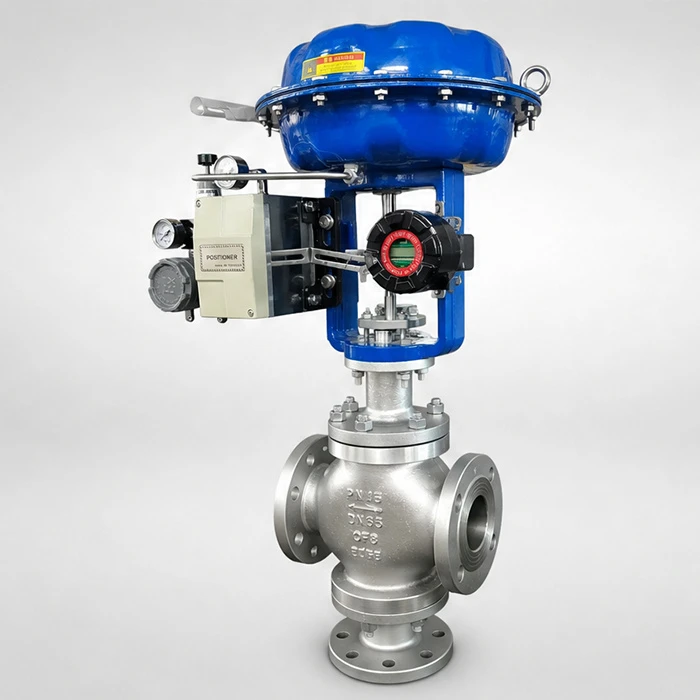
The Three Way Control Valve can be designed for mixing or diverting service. A mixing valve combines two inlet flows into one outlet. A diverting valve sends one inlet flow to two different outlets.
This function is useful when the process needs temperature control, bypass regulation, or flow distribution. It can reduce piping complexity and make the control loop easier to manage.
Compact Pipeline Layout
A three way valve can sometimes replace two separate two-way valves. This helps save space in the pipeline. It also reduces the number of actuators, positioners, and control signals.
For project buyers, this can lower installation cost and simplify future maintenance. It also makes the system layout cleaner, especially in skid-mounted equipment or compact plant rooms.
Stable Temperature Control
Many three way valves are used in temperature control systems. The valve adjusts the ratio between hot and cold flow, or between process flow and bypass flow. This helps the outlet temperature stay closer to the control target.
This is common in heat exchanger systems, thermal oil units, hot water loops, cooling circuits, and HVAC systems.
Custom Port Direction
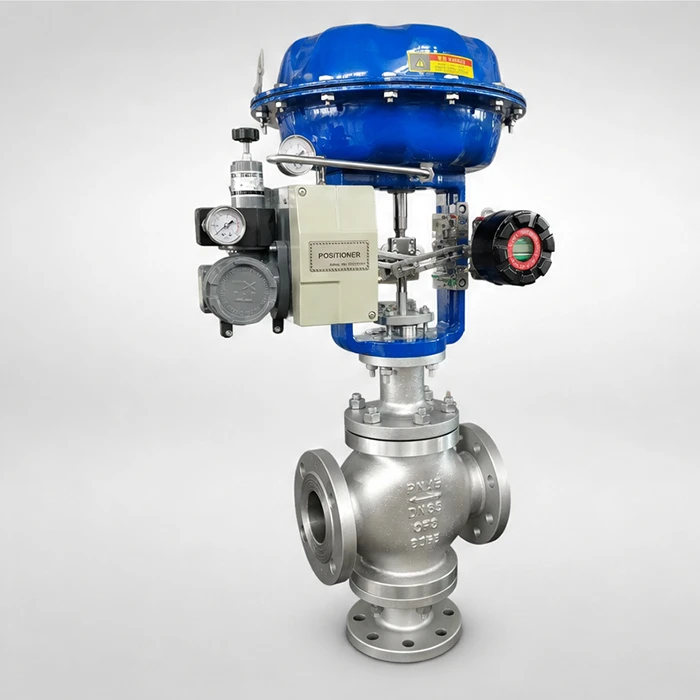
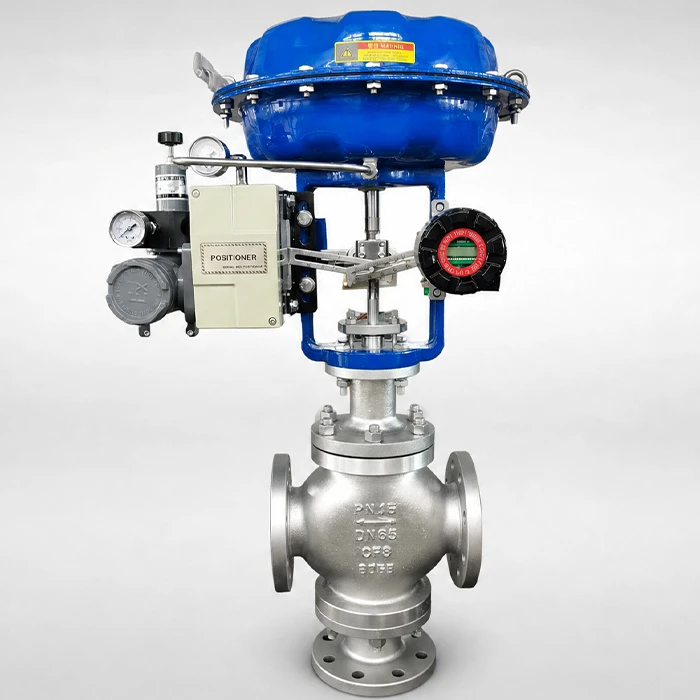
Port arrangement must match the pipeline design. Yuhong can confirm the port direction, flow path, actuator action, and positioner setting before production.
This point is important. If the valve is installed with the wrong flow direction, the control result may be poor. The valve may also suffer from noise, vibration, or uneven trim wear.
Product Advantages For Buyers
A Three Way Control Valve helps buyers reduce the number of valves in some process systems. One valve body can handle flow mixing or flow splitting. This can lower the total cost of valve packages, actuators, accessories, and installation work.
For end users
The valve can make temperature or flow control more stable. A well-designed three way valve can adjust the flow ratio smoothly. This is useful in systems where process temperature changes quickly.
For equipment manufacturers
This product is easy to integrate into complete systems. It can be used in heat exchanger skids, boiler auxiliary systems, thermal oil packages, cooling units, and industrial automation equipment.
For distributors
The Three Way Control Valve is a practical product for customers who need more than simple on-off control. It is a flow management solution, not only a valve.
Application Solutions
In heat exchanger systems, the valve can control the amount of medium passing through the exchanger and the bypass line. This helps keep outlet temperature stable.
01
In thermal oil systems, it can mix or divert hot oil flow to protect equipment and maintain process temperature.
02
In HVAC and district heating systems, it can adjust hot water and return water flow. This helps improve energy use and comfort control.
03
In chemical plants, it can be used for process mixing, bypass regulation, and fluid distribution when the medium is clean and suitable for globe valve control.
04
In industrial skids, it can reduce the number of valves and save installation space. This is useful for packaged equipment suppliers and OEM users.
05
Manufacturing And Quality Control
Yuhong Valve pays attention to the flow path of three way valves. The body casting, internal chamber, plug, seat, and port area must match the required function. A mixing valve and a diverting valve may look similar from outside, but the internal flow logic is different.
During production, key parts are machined according to drawings. The plug and seat are checked for fit. The actuator stroke and positioner signal are tested to make sure the valve moves correctly between each flow position.
Each valve can go through shell pressure test, seat leakage test, stroke test, actuator movement test, and final inspection before delivery. For project orders, drawings, material certificates, pressure test reports, inspection photos, and packing photos can be supplied.
Production follows ISO 9001 quality management. The valve can be made according to IEC 60534, ASME B16.34, ASME B16.5, ANSI/FCI 70-2, GB, and project standards.
Packaging And Shipping
Three way valves need clear port protection and clear marking before shipping. Yuhong covers the flange faces to protect the sealing surfaces. The valve body, actuator, and accessories are fixed inside an export wooden case.
Port marks, flow direction marks, product model, size, and order number can be checked before packing. This helps buyers identify the valve faster when goods arrive at site.
For sea shipment, moisture-proof packing can be added. Packing photos can also be provided before delivery. This helps distributors and project buyers check the goods before shipment.
How We Help Buyers Lower Purchase Risk
For a Three Way Control Valve, the biggest risk is not only quality. The bigger risk is wrong flow direction or wrong valve function. A mixing valve and a diverting valve are used for different control purposes. If this is not confirmed early, the valve may not work as expected on site.
Yuhong checks the process layout before production when needed. We confirm which port is inlet, which port is outlet, and whether the valve is used for mixing, diverting, or bypass control. This helps avoid installation mistakes and control problems.
We also review temperature, pressure, flow range, and medium condition. These data help us choose the trim, actuator, and sealing structure. If the buyer has a control diagram or P&ID, our engineers can help check the basic valve arrangement.
For distributors and project contractors, Yuhong can provide drawings, port direction notes, technical sheets, inspection reports, and packing photos. These documents make communication easier with end users and reduce approval delays.
FAQ
Q1: What Is The Difference Between A Mixing Type And A Diverting Type Three Way Valve?
A mixing type valve combines two inlet flows into one outlet. A diverting type valve splits one inlet flow into two outlet lines. The internal structure and flow direction should be confirmed before production.
Q2: Can One Valve Be Used For Both Mixing And Diverting Service?
Not always. Some designs may look similar, but the plug structure and flow path may be different. Please confirm the real use first. Yuhong engineers can check the flow direction based on your pipeline layout.
Q3: Where Is A Three Way Control Valve Commonly Used?
It is commonly used in heat exchangers, hot water systems, thermal oil units, cooling circuits, bypass lines, HVAC systems, and process mixing lines.
Q4: Why Is Port Marking Important?
Port marking helps users install the valve correctly. If the inlet and outlet ports are connected wrongly, the valve may not control the flow ratio properly. It may also cause noise, vibration, or poor temperature control.
Q5: Can This Valve Be Used For Steam?
It can be used for some steam or condensate systems when the structure, material, pressure rating, and sealing design match the working condition. The flow direction and temperature control purpose should be checked first.
Q6: What Information Should Buyers Provide Before Quotation?
Buyers should provide medium, temperature, pressure, flow range, pipe size, connection standard, flow direction, and whether the valve is used for mixing or diverting. A simple pipeline sketch is very helpful.
Q7: What Should Be Checked During Installation?
The installer should check port direction, actuator action, flow arrow, flange alignment, and control signal. For temperature control loops, the sensor position should also match the control purpose.
Q8: Can You Provide Drawings Before Production?
Yes. Yuhong can provide outline drawings and port arrangement drawings for project confirmation. This helps the customer check pipeline layout before manufacturing.
Why Choose Yuhong Valve
Three way valves need clear communication before production. A small misunderstanding about port direction can create a big problem at site. Yuhong checks the valve function, flow path, actuator action, and port marking with the buyer before delivery.
Our team can work with your process data, pipeline sketch, or P&ID. We help confirm whether the valve should be mixing type, diverting type, or bypass type. This makes the order safer for project buyers and distributors.
Yuhong also keeps order records for valve size, material, port direction, actuator type, and trim design. If the customer places repeat orders or needs spare parts later, the previous data can be traced.
For distributors, this valve is useful in many industries. It can be sold for heating systems, cooling systems, heat exchangers, chemical process lines, and skid-mounted equipment. Yuhong can support your sales with drawings, technical sheets, test reports, product photos, and packing photos.
A good Three Way Control Valve should not only pass pressure testing. It should match the pipeline logic and control purpose. Yuhong helps buyers check these details before the valve reaches the site.

Expert Valve Selection
Do you need a Three Way Control Valve for mixing, diverting, or bypass control?
Send your medium, temperature, pressure, flow range, pipe size, and flow direction to Yuhong Valve. A simple pipeline sketch or P&ID will help us prepare a more accurate valve proposal.
Hot Tags: three way control valve, China three way control valve manufacturers, suppliers, factory


