

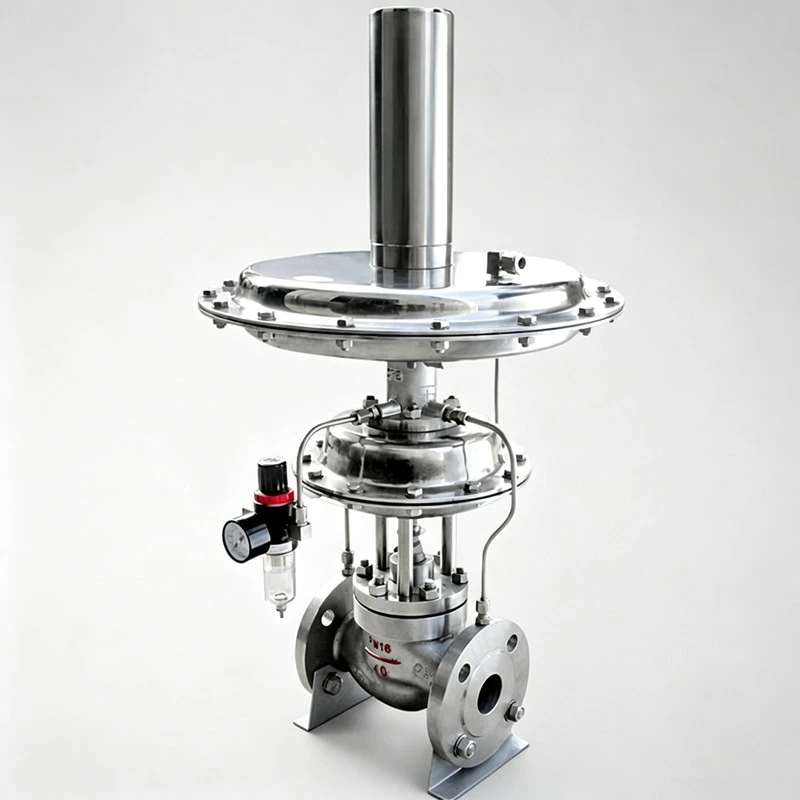
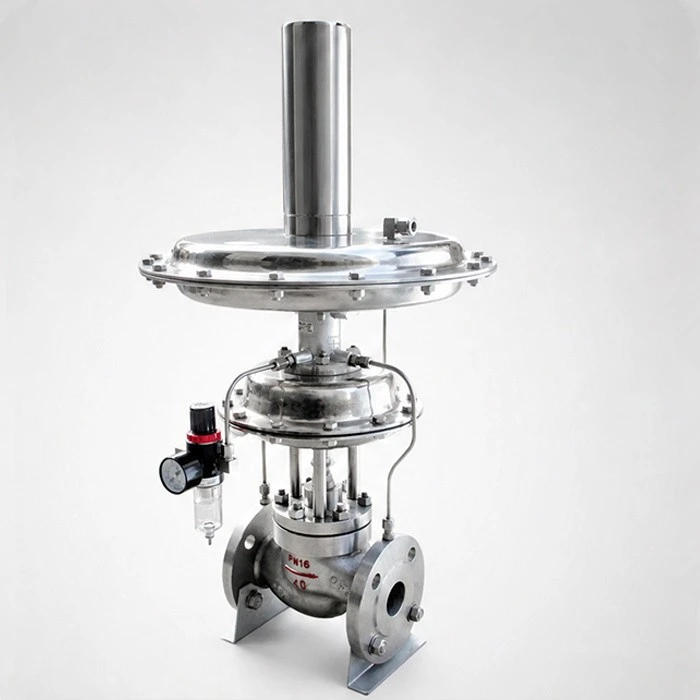
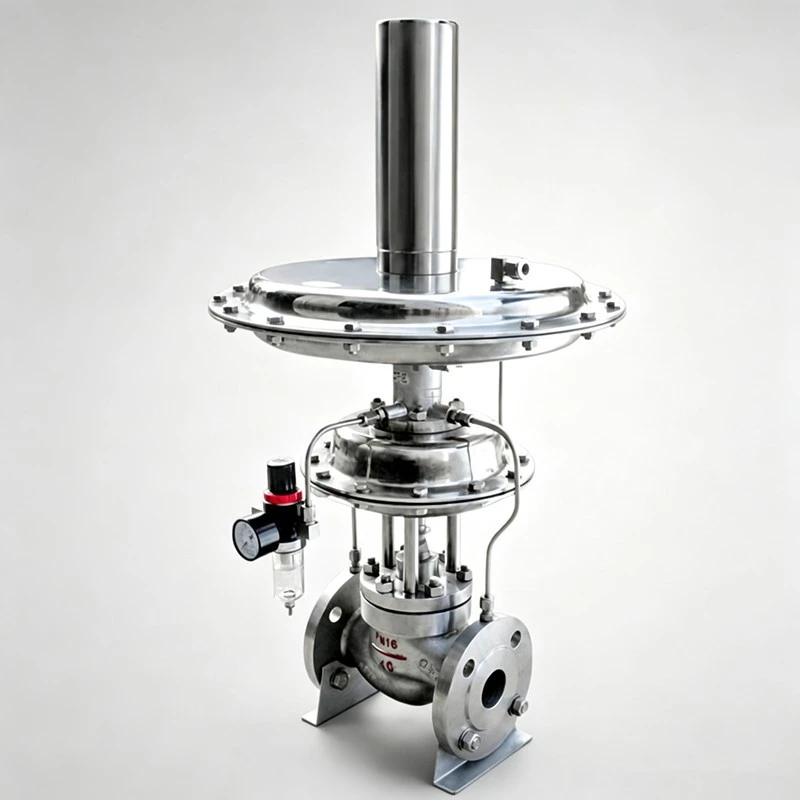
Shandong Yuhong Valve Co., Ltd. is one of the most reliable manufacturers and suppliers of nitrogen blanketing valve in China. We have world-leading production equipment and strong manufacturing capabilities. Welcome to wholesale bulk high-grade nitrogen blanketing valve from our factory.
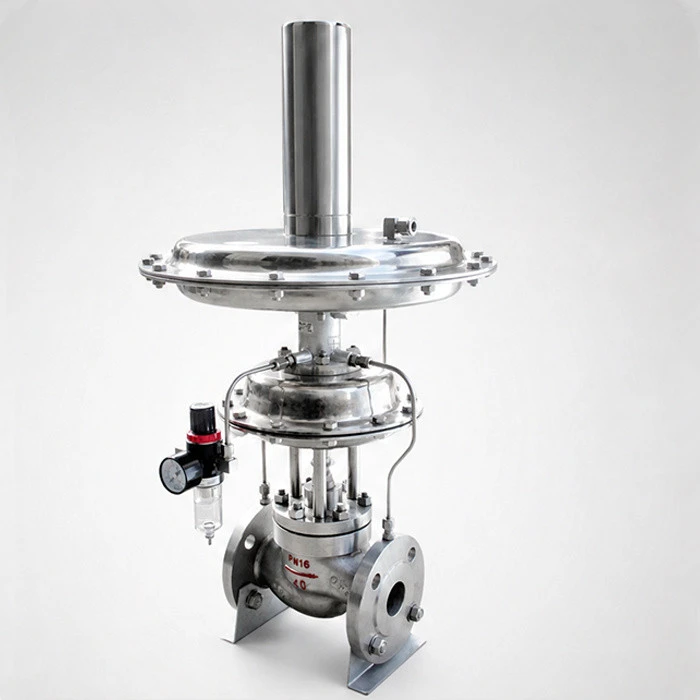
A nitrogen blanketing valve is a pressure regulator for the tank. When tank pressure falls below setpoint, it cracks open and lets nitrogen in; when the tank hits setpoint, it shuts. That's the whole job - keep a clean gas cushion on the liquid without anyone touching it.
A lot of liquids shouldn't sit in contact with air. Oxygen drives oxidation, moisture ruins product, and some vapors turn the headspace flammable. A blanketing system puts an inert layer above the liquid so the tank breathes safely through filling, emptying, temperature swing, and idle storage. It's normally paired with a breather valve, nitrogen vent valve, flame arrester, gauge, and the rest of the tank safety set.
This isn't an on-off valve - it has to react to small pressure moves. Open too late and air gets in; open too far and you burn nitrogen. So before we build one we lock the set pressure, tank size, nitrogen supply pressure, flow demand, and the medium. Our engineers read the tank pressure range, nitrogen inlet pressure, blanketing setpoint, vapor condition, connection size, and layout, then pick the structure and setting that fit.
Technical Parameters
|
Item |
Standard Options & Custom Range |
|
Product Name |
Nitrogen Blanketing Valve |
|
Other Name |
Tank Blanketing Valve / Nitrogen Blanketing Regulator |
|
Valve Function |
Nitrogen supply pressure control for storage tanks |
|
Structure Type |
Self-operated pressure regulating structure / pilot-operated type by requirement |
|
Size Range |
DN15–DN100 / 1/2"–4" |
|
Pressure Rating |
PN16–PN40 / ANSI Class 150–Class 300 |
|
Body Material |
WCB, CF8, CF8M, low-temperature material, project material |
|
Trim Material |
304, 316, PTFE, FKM, project sealing material |
|
Connection Type |
Flanged, threaded, customized connection |
|
Pressure Setting Range |
Customized according to tank blanketing requirement |
|
Applicable Gas |
Nitrogen, clean inert gas |
|
Applicable Tank Media |
Solvent, chemical liquid, oil product, pharmaceutical liquid, sensitive storage media |
|
Actuation Method |
Self-operated by tank pressure |
|
Optional Accessories |
Pressure gauge, filter, shut-off valve, breather valve, flame arrester, pressure transmitter |
|
Main Standards |
ISO 9001, ASME B16.34, ASME B16.5, GB, project standard |
|
Inspection |
Pressure test, leakage test, set pressure test, appearance inspection |
Product Features
Stable Nitrogen Supply
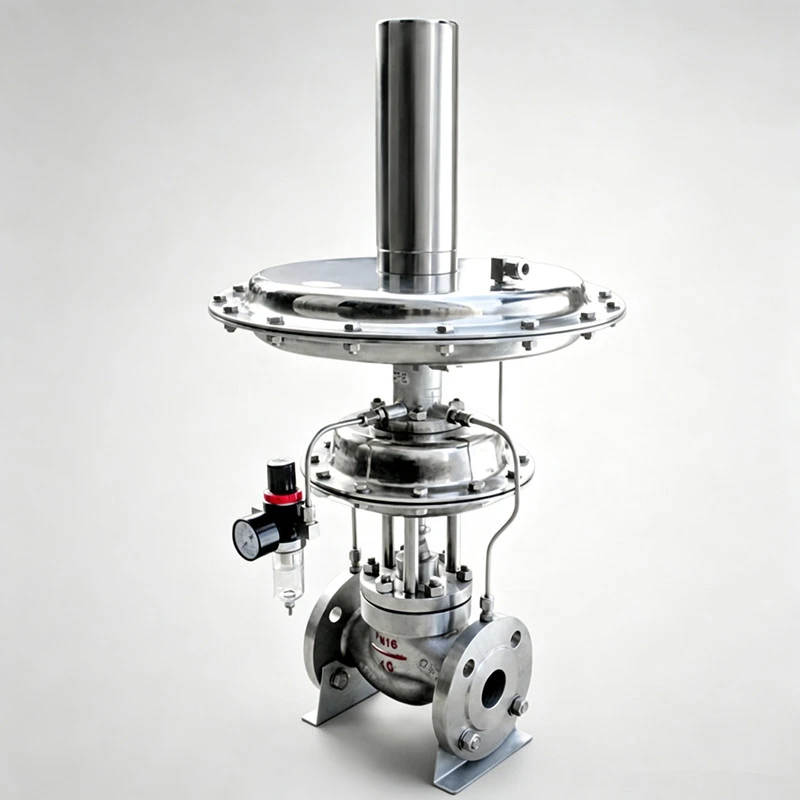
The valve opens when tank pressure drops under setpoint and feeds nitrogen until it's back; then it closes. The gas cushion stays put with no manual adjustment, and outside air can't slip in during discharge or a temperature drop.
Protection Against Oxygen and Moisture
Blanketing is for product that reacts with air - solvents, chemicals, oils, pharma materials all lose quality on exposure. The valve holds a protective layer that cuts oxidation, water pickup, and contamination, so storage quality holds and product loss drops.
Low-Pressure Sensitive Control
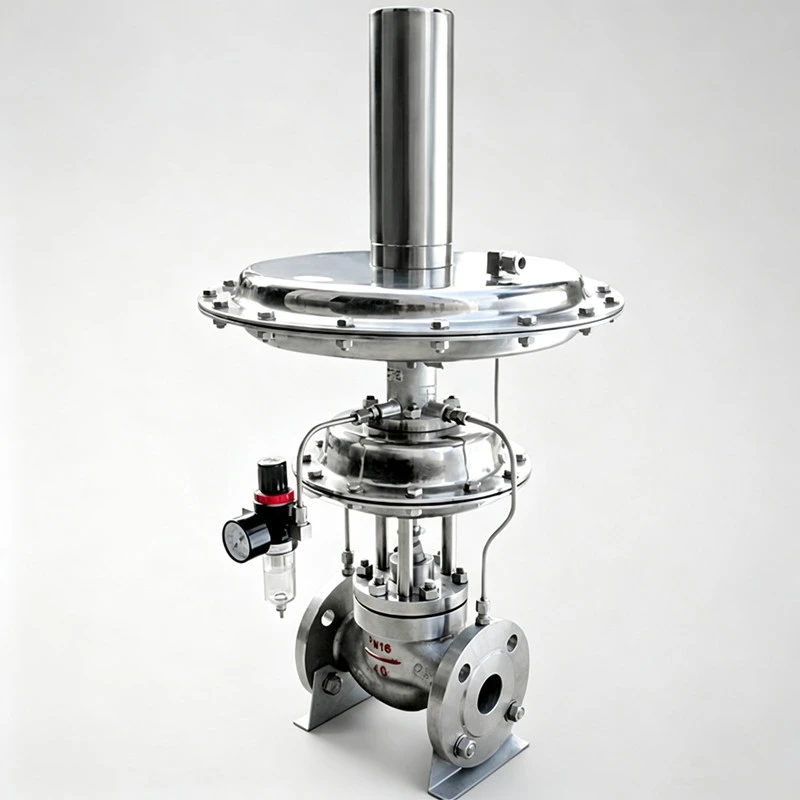
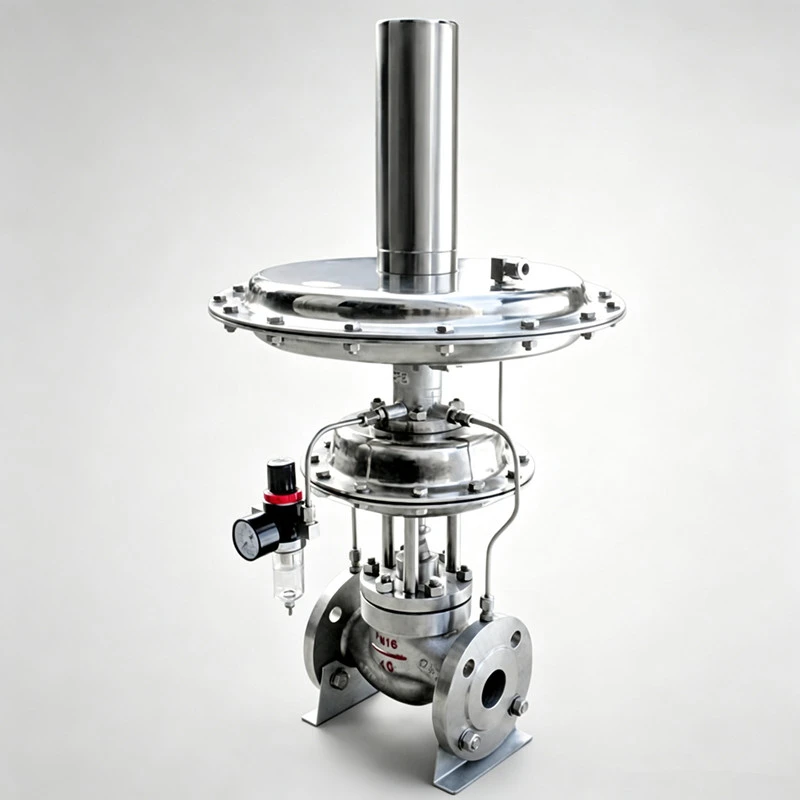
Blanketing pressure runs low, and the valve has to feel small changes and respond smoothly. A rough regulator wastes nitrogen or lets tank pressure swing. We match the spring, diaphragm, seat, and trim to the tank pressure range - not just the pipe size.
Works Without External Power
These valves normally run on tank pressure and spring force, no electric or instrument air. That suits tank farms, outdoor storage, and chemical units: fewer parts, simpler system, easier for the operators to keep up.
Product Advantages For Buyers
Chemical plants
Keeps air off sensitive media: solvents, alcohols, acids, oils. Anything that needs clean storage.
Tank farm operators
Controls nitrogen use. A valve with poor response keeps feeding and burns gas; a correct setting holds pressure with less loss.
Distributors & project suppliers
Usually sold as part of a tank safety package, alongside breather and vent valves, flame arresters, gauges, shut-offs. Makes the supply complete.
End users
Protects quality, cuts vapor risk, and keeps the tank safer to run.
Application Fields
Chemical Storage
Nitrogen cover for solvents, acids, alkalis, process liquids.
01
Oil & Fuel
Keeps oxygen off the stored liquid.
02
Pharma & Fine Chemical
Protects high-value liquid from air and moisture.
03
Food & Additives
Blanketing slows oxidation and holds product stable.
04
Tank Farms
Runs with vent valves and safety devices as a full pressure-protection system.
05
Production And Inspection
We check body, seat, diaphragm, spring, stem, and trim as they're built. Sealing faces stay clean, the diaphragm stays flexible across the working range, and the spring matches the set pressure. Set pressure is the key inspection point: before shipment each valve is tested for pressure response, sealing, and movement, and has to open and close smoothly inside spec. Project orders ship with drawings, pressure test reports, material certs, set-pressure data, inspection photos, and pack shots. Built under ISO 9001.
Installation And Use Notes
Fit it to the flow-direction mark. Keep the nitrogen supply clean and dry - a strainer ahead of the valve saves the seat and the pressure response from dirt.
The sense point has to read real tank pressure. A blocked, over-long, or badly placed sense line and the valve answers wrong.
The tank still needs proper venting. A blanketing valve adds gas; it does not stand in for overpressure protection. Breather, vent, emergency vent, and flame arrester are sized off the tank design, not the valve.
At commissioning, bring the set pressure in slowly and watch tank pressure, nitrogen flow, and valve response.
Packaging And Shipping
Small sizes ship in cartons, larger in export wooden cases. Flange faces and threaded ends are capped, and loose items - gauges, fittings - pack separately and labeled. Sea freight gets moisture-proof wrap. Pack photos go out before delivery, and the case shows model, size, set pressure, order number, and shipping marks so the valve is easy to ID on arrival and harder to fit wrong.
Purchase Notes For Project Buyers
Tank condition matters more than pipe size here. Confirm tank volume, blanketing setpoint, nitrogen supply pressure, stored medium, normal operation, and venting arrangement. Don't oversize: too much capacity and nitrogen surges in and the pressure hunts; too little and the tank runs short during discharge or a temperature swing. We'll review the working data and recommend size and set pressure, and if the system also needs a vent or breather valve we can check the basic match.
FAQ
Q1: What does a nitrogen blanketing valve do?
Feeds nitrogen when tank pressure drops below setpoint, holding a protective layer above the liquid.
Q2: Why nitrogen?
It's inert for most storage. Keeps the liquid off oxygen and moisture, protects quality, and cuts risk.
Q3: Is it just a pressure-reducing valve?
Same pressure-control idea, different job. A blanketing valve is built for low tank pressure and has to respond gently to small moves.
Q4: Does the tank still need a vent valve?
Yes. The blanketing valve supplies nitrogen; venting and overpressure protection are separate. A breather or nitrogen vent valve is sized off the tank design.
Q5: What wastes nitrogen?
Wrong set pressure, oversized capacity, seat leak, poor sense line, unstable operation - check the system as a whole.
Q6: Can it go on flammable-liquid tanks?
In many, as part of a blanketing plan. The full design still needs venting, flame protection, grounding, and site safety rules.
Q7: What do you need for a quote?
Tank volume, stored medium, nitrogen supply pressure, required tank pressure, flow demand, connection size, material, and whether you need matching vent devices.
Q8: Which spares?
Diaphragm, spring, seat, gasket, O-ring, and filter element if you run a strainer. Tank farms should keep sealing spares on hand.
Why Choose Yuhong Valve
Blanketing looks simple and quietly wastes nitrogen when the valve is mismatched - so we check the pressure range, tank use, and nitrogen supply before we build, and we look at the whole tank system, not the valve alone. Blanketing, vent, breather, and flame arrester have to work together, and we'll help you check the basic match before it ships. Distributors like it because it sells as part of a tank safety package, not a lone valve. You get drawings, test reports, set-pressure data, photos, and a build record, so repeat orders keep the same setting, material, and connections. For steadier tank pressure, less nitrogen burned, and cleaner storage, it's the practical call.

Expert Valve Selection
Need a nitrogen blanketing valve for chemical, solvent, or oil tanks - or any storage that can't meet the air?
Send us tank volume, stored medium, nitrogen supply pressure, required tank pressure, connection size, and material, and our team will size the valve to your condition and send a proposal.
Hot Tags: nitrogen blanketing valve, China nitrogen blanketing valve manufacturers, suppliers, factory


